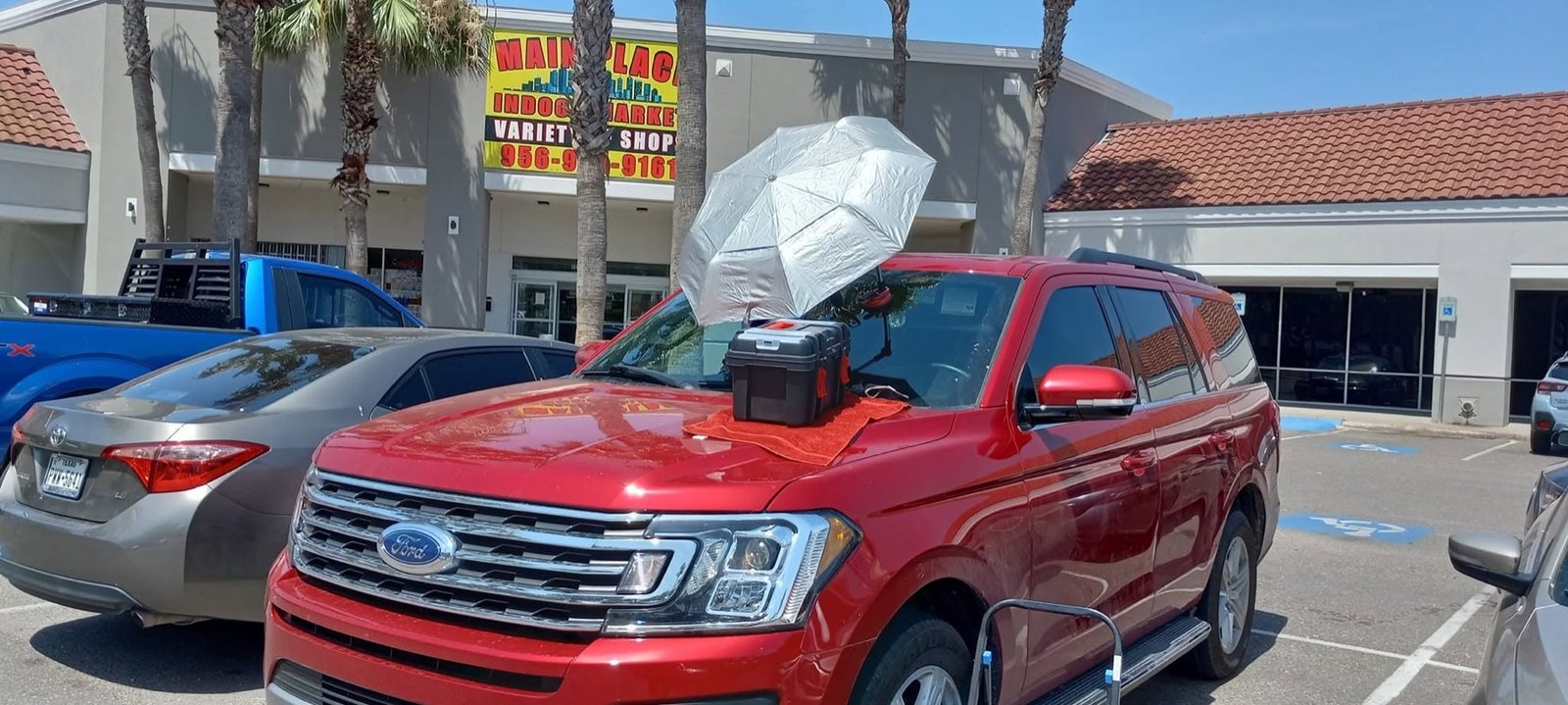
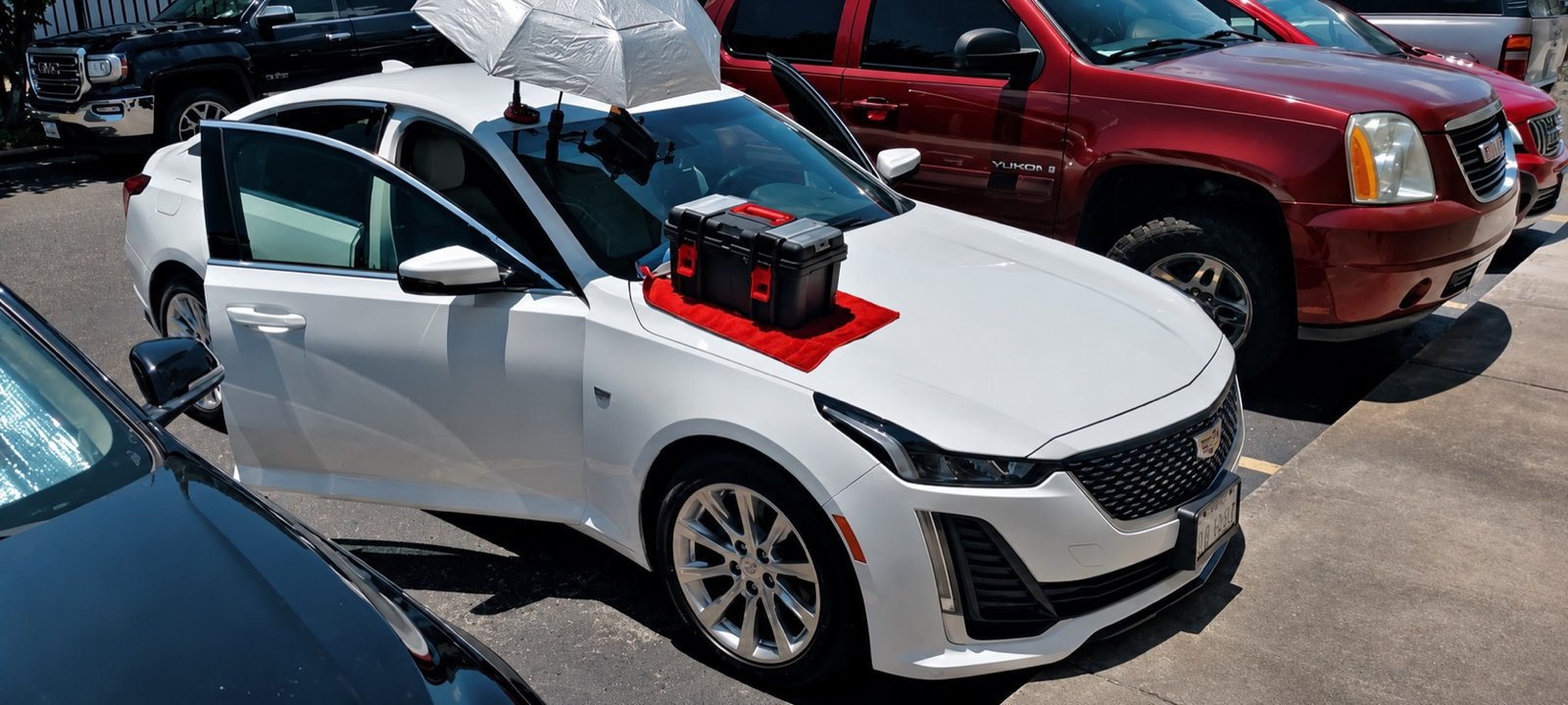
Mobile Window Tinting in McAllen & the Rio Grande Valley
Valley sun is relentless. Professional tint cuts the heat, protects your interior, and keeps you legal — installed at your home or workplace.
15 Years in Business
Serving the Valley since 2011
100% Mobile Service
We come to your home or work
Affordable Cash Prices
Fair out-of-pocket rates, no claim needed
Fully Insured
Licensed and insured technicians
What tint actually does in a South Texas summer
Anyone who has come back to a car parked all afternoon in McAllen knows the problem. Interior surfaces in direct Valley sun get hot enough to be genuinely painful to touch, your air conditioning fights a losing battle for the first ten minutes of every trip, and over a few years your dashboard and seats fade and crack.
Quality tint works by rejecting infrared energy before it gets inside, not just by making the glass look darker. That is the distinction that matters when comparing films: a cheap dyed film goes dark and fades purple within a couple of Valley summers, while a decent ceramic film rejects a large share of the heat without going especially dark at all.
- Cuts interior heat noticeably in Valley summers
- Blocks the vast majority of ultraviolet light
- Protects dashboards and upholstery from fading and cracking
- Reduces glare on Expressway 281 at sunrise and sunset
- Adds privacy for anything left in the vehicle
- Helps hold glass together if a window is broken
Darker does not mean cooler
What is actually legal in Texas
We install to the law. Getting this wrong costs you a citation and the price of stripping the film off again, so it is worth understanding before you choose.
Front Side Windows
Must let more than 25% of light through. This is the limit people most often break, usually without realising it.
Windshield
Non-reflective tint is permitted only along the top of the glass, down to the AS-1 line marked by the manufacturer.
Back Side Windows
Any darkness is permitted on the rear side windows, so you can go considerably darker behind the front seats.
Rear Window
Any darkness is permitted provided the vehicle has working mirrors on both sides, which effectively every vehicle does.
Colour Restrictions
Red, amber, and blue tints are not permitted on the windshield or front side windows in Texas.
Medical Exemptions
Texas allows a medical exemption for documented light-sensitivity conditions. Bring the paperwork and we will work to it.
How a tint job goes
Pick Your Film
We talk through shade and film type against how you use the vehicle, what you park under, and what the law allows.
Deep Clean the Glass
Every speck of dust under the film shows for the life of the tint. The cleaning stage takes longer than people expect, and it should.
Cut and Heat Shrink
Film is cut to your glass and heat-shrunk to match the curve. Rear windows in particular need this done properly or the film will finger and lift.
Apply and Cure
Film applied, squeegeed out, and left to cure. We tell you how long to leave the windows up — usually a few days in Valley heat.
Which tint is worth paying for
The cheapest films are dyed. They look fine on day one, then Valley ultraviolet gets to work and within a couple of summers they turn purple, bubble, and start peeling at the edges. You will pay twice: once to fit it, once to strip it off.
Carbon films hold their colour far better and reject meaningfully more heat. Ceramic films are the top tier — they reject the most infrared energy for a given shade and, importantly, they do not interfere with phone signal, GPS, tyre pressure sensors, or toll tags the way older metallic films could. In a climate like ours, ceramic is usually the film that actually pays for itself.
- Dyed film is cheapest and fades fastest here
- Carbon holds colour and rejects real heat
- Ceramic rejects the most heat at any given shade
- No signal interference with modern films
Reviews from Valley drivers
Every review on this page is a real one, left by a real Valley customer.
Questions about window tint
How dark can I legally go in Texas?
Front side windows must let more than 25% of light through. Behind the front seats you can go as dark as you like, and the windshield may only be tinted along the top strip down to the AS-1 line. We will not fit anything illegal on the front doors, because it is your citation and your cost to remove it.
How long before I can roll the windows down?
Usually two to three days, and Valley heat actually helps the film cure faster. We will give you a specific time. Rolling down too early is the most common way a fresh tint job gets ruined.
Why does my tint look hazy or have small bubbles at first?
That is moisture still curing out from under the film and it is completely normal. It clears on its own over the first several days. What is not normal is large bubbles or lifting edges weeks later — that is an installation problem, and if it were ours we would come back and fix it.
Can you tint at my house or office?
Yes. What we need is a clean, reasonably sheltered spot — a garage or carport is ideal, because airborne dust is the enemy of a good tint job. Working in an open lot in a stiff Valley wind is not doing you any favours, so we will talk through location when we book.
Will tint interfere with my toll tag or phone signal?
Not with the films we use. Older metallic tints could genuinely disrupt signal, tyre pressure sensors, and toll transponders. Modern carbon and ceramic films are non-metallic and do not.
Beat the Valley sun. We come to you.
Call or text (956) 636-8300 and we’ll talk through film choice, legal shades, and pricing for your vehicle. Installed at your home or workplace.